





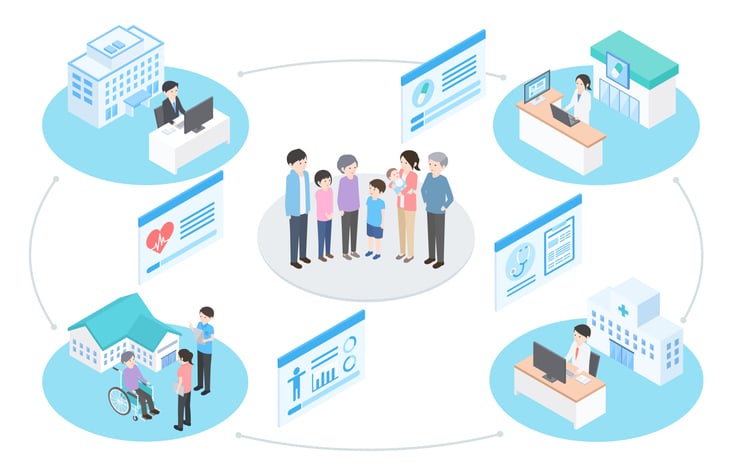






Modern healthcare runs on technology. From Electronic Health Records (HER) access to patient scheduling and telehealth, dependable IT performance directly affects care quality and revenue. Many medical practices begin with local IT vendors who provide onsite troubleshooting and basic system maintenance. Yet as practices expand—opening new locations, adding providers, and adopting cloud-based tools—those local vendors often can’t keep up. The result? Slow response times, security gaps, compliance risk, and unpredictable costs.
Local IT support can be small, often regional technology providers offering reactive fixes and limited monitoring. While useful for smaller operations, their capacity rarely meets the infrastructure, uptime, and compliance needs of multi-site healthcare organizations.
This guide outlines seven clear signs your practice has outgrown local IT support and how shifting to enterprise grade co-managed IT services can restore stability, safeguard patient data, and prepare your organization for scalable growth.
1. Frequent EHR slowdowns and downtime.
When EHR systems frequently lag, crash, or take minutes to load charts, it’s more than an annoyance; it’s lost time, missed data, and potential risk to patient safety. Electronic Health Records are digital versions of medical histories, treatment plans, and diagnostic results used by clinicians in real time. Delayed EHR access disrupts appointments and forces manual workarounds that compound inefficiency across departments.
Reactive vs. Proactive EHR Support
Capability | Reactive Local IT | Proactive Co-Managed IT |
Monitoring | Manual checks | 24/7 automated monitoring |
Downtime response | Best effort, no guarantee | Defined response targets |
Patch management | As needed | Scheduled, proactive patching |
Uptime assurance | Limited visibility | Measurable service performance |
Frequent system issues often mean your infrastructure lacks the monitoring, redundancy, and scalability modern healthcare demands. Magna5 helps close these gaps with proactive oversight that reduces downtime before it affects patient care.
2. Recurring software and hardware end-of-life issues.
If your team constantly replaces outdated PCs, struggles with unsupported operating systems, or encounters compatibility errors, your IT lifecycle planning is broken. End-of-life (EOL) occurs when manufacturers stop providing updates and patches, leaving systems open to security and compliance failures.
A structured asset management plan helps prevent these disruptions by tracking device age, support status, and upgrade costs. Without it, practices risk running mission-critical applications on obsolete platforms, slowing the adoption of new technologies and jeopardizing data integrity.
Common consequences include:
- Failed EHR updates due to legacy OS versions
- Security vulnerabilities in unpatched firmware
- Delays deploying new imaging or lab integrations
Magna5 helps healthcare organizations establish centralized lifecycle management tied to compliance and security frameworks, reducing costly downtime and unplanned replacements.
3. Increasing cybersecurity and compliance risks.
As practices grow, their attack surface expands, but local IT teams often lack the tools or expertise to match evolving threats. Incomplete firewall configurations, expired endpoint protection, and missing security audits leave patient records vulnerable.
HIPAA compliance requires strict controls over Protected Health Information (PHI), including encryption, access logs, and breach response readiness. Lapses in these safeguards can cause severe regulatory fines and reputational damage.
A mature co-managed IT environment may include:
- 24/7 security operations monitoring
- Secure offsite backup strategies
- Regular vulnerability assessments and security testing
- Documented incident response plans
These measures form the layered defense that modern healthcare requires. With Magna5’s managed security and compliance services, real-time monitoring and documented response workflows help support ongoing compliance efforts and resilience.
4. Staff spending excessive time on IT tasks.
When clinicians and administrators spend hours troubleshooting network issues, rebooting equipment, or re-entering lost data, it’s a clear sign your IT support has been outgrown. Every minute diverted from patient care impacts both productivity and morale.
Managed IT services from a comprehensive MSP eliminate these inefficiencies by offloading monitoring, maintenance, and troubleshooting to dedicated specialists. With a modern helpdesk, automated backups, and integrated systems support, staff regain time for their primary roles, and IT issues are addressed before they escalate.
Practical steps to regain efficiency:
- Implement a dedicated healthcare helpdesk with defined response targets.
- Centralize ticketing and reporting across all locations.
- Automate backups and updates to prevent recurring issues.
Magna5’s 24/7 helpdesk and streamlined response workflows help reduce disruption and support better patient experiences.
5. Storage, interoperability, and analytics demands exceed capacity.
Rapid data growth—from imaging files, lab results, and telemedicine—can quickly overwhelm local storage infrastructure. Interoperability, the ability of different healthcare applications to securely exchange and use patient data, grows increasingly complex as clinical systems multiply.
When storage limitations emerge, slow file access and data loss risks often follow. Cloud and hybrid storage models provide scalability, built-in redundancy, and the performance needed to support modern reporting and analytics initiatives.
Traditional vs. Modern Storage
Model | Scalability | Redundancy | Analytics Readiness |
On-premises local | Limited | Manual backups | Low |
Cloud or Hybrid | Elastic on demand | Automated | High |
Modern managed IT solutions help practices extend data capacity, improve interoperability, and support data-driven operations. Magna5 designs secure private and hybrid-cloud environments that align storage, performance, and compliance requirements.
6. Rising IT costs without budget visibility.
Escalating and unpredictable IT expenses are a red flag. Many practices pay for fragmented services with limited insight into total spend. IT spend benchmarking helps track costs per user or by department to identify inefficiencies. Local vendors seldom provide integrated cost reporting, causing unplanned upgrades and hidden hardware fees.
Managed service providers can help create greater financial visibility through:
- Consolidated service reporting
- Tiered or standardized pricing models
- Clear forecasting aligned with capacity planning
This transparency enables financial predictability and smarter technology investment. Magna5 helps organizations improve visibility into IT operations and budgeting through clearer reporting, strategic guidance, and more predictable planning.
7. Need for 24/7 monitoring and formal SLAs.
Patient data and care operations don’t pause after hours and your IT monitoring shouldn’t either. Around-the-clock oversight identifies issues before they disrupt service delivery, while formal service agreements provide measurable performance standards.
A Service Level Agreement (SLA) defines expected response times and service commitments between your practice and provider. Local technicians often lack such commitments, leaving response and recovery to “best effort.”
Advantages of SLA-Driven Monitoring
- Continuous operational visibility
- Faster incident resolution
- Clear accountability
- Better audit and reporting support
Whether supporting remote clinics or telehealth systems, consistent monitoring and defined service expectations are essential for reliability and compliance. Magna5 delivers 24/7 managed services with transparent reporting across complex healthcare environments.
Assessing Your IT support needs and planning next steps.
Determining readiness to move beyond local IT starts with a risk-based assessment. Evaluate both technical and financial exposure to prioritize which gaps pose the greatest operational risk.
Conducting this evaluation helps clarify whether co-managed IT services will provide the scalability, compliance support, and continuity your growing healthcare organization requires. Magna5 can guide these assessments, aligning IT goals with clinical and operational outcomes.
Magna5 managed IT for healthcare.
Magna5 partners with healthcare leaders who have surpassed what local IT can deliver. With national resources backed by local, high-touch team members, our co-managed IT model blends responsive support with scalable resources and strong cybersecurity discipline. Through a layered set of managed security, cloud, and compliance services, we provide real-time threat monitoring, automation, and compliance support designed for healthcare environments governed by strict regulations.
Magna5’s approach is consultative and outcome-driven. We extend your internal IT capabilities with 24/7 monitoring, incident response, and network optimization, supported by clearly defined service expectations. The result is reliable systems, measurable performance, and more predictable IT operations so clinicians can focus on care rather than not technical firefighting.
FAQs about healthcare IT support.
Q: What are the main signs that my healthcare practice has outgrown local IT support?
A: Common signs include recurring EHR slowdowns, increasing cybersecurity risks, outdated systems, unclear costs, limited storage, staff managing IT tasks, and missing 24/7 monitoring or service commitments.
Q: How does managed IT improve healthcare practice performance?
A: Managed IT provides proactive monitoring, faster issue resolution, and compliance support that reduce downtime and help enable secure, efficient care delivery. Magna5 brings these capabilities together in a coordinated service model.
Q: What is the average IT spend as a percent of revenue for healthcare practices?
A: IT spending varies significantly based on size, growth stage, regulatory requirements, and technology maturity. Many organizations benchmark spend by provider, user, or percentage of revenue to identify inefficiencies and guide planning.
Q: Why are Service Level Agreements (SLAs) important for healthcare IT?
A: SLAs establish measurable service expectations and response targets, helping support reliable operations and stronger accountability for systems that affect patient care and data protection.
Q: Is a hybrid model of MSP and in-house IT support effective for growing practices?
A: Yes. A co-managed model combines your internal knowledge with a managed service provider’s scale, security capabilities, and compliance support. Magna5’s co-managed approach is designed to support that kind of balanced partnership for sustained growth.