












Over the past several months, many organizations have noticed a sharp increase in the number and frequency of software and security updates. This is not limited to Microsoft. Operating systems, browsers, productivity platforms, security tools, business applications, drivers, firmware, and cloud-connected services are all being updated more aggressively than in previous years.
This increase is not happening because software vendors have suddenly become careless. It is happening because vulnerabilities are being discovered, disclosed, and exploited faster than ever before.
Security updates remain essential to protecting systems and data, but the faster pace of patching can also create temporary challenges. Users may notice slower performance, longer reboot times, login interruptions, printing or networking issues, browser changes, or application compatibility problems after updates are installed.
While these disruptions are frustrating, they are often the side effect of necessary security changes in a much more aggressive threat environment.
The Pace of Patching Is Increasing
Microsoft provides a clear example of the trend. In September and October of 2026, Microsoft set consecutive records for the number of vulnerabilities patched in a single Patch Tuesday release. October included fixes for more than 1,400 vulnerabilities, following 974 the month before.
But this is not just a Microsoft issue.
Browser vendors, including Chrome and other Chromium-based browsers, now release security updates on a frequent cadence, sometimes weekly. In some cases, vendors also release emergency out-of-band updates when a vulnerability is already being actively exploited.
The result is a software environment where updates are more frequent, more urgent, and more complex than many organizations were used to in the past.
The Bigger Picture: Vulnerabilities Are Increasing
Industry-wide vulnerability reporting has risen sharply over the last several years. According to CVE.org’s published CVE (Common Vulnerabilities and Exposures) records, the number of publicly disclosed vulnerabilities has grown significantly since 2021.
In 2026, the first two quarters alone accounted for 35,872 published CVEs. Q2 2026 saw 20,709 CVEs, which exceeded the entire year of 2021.
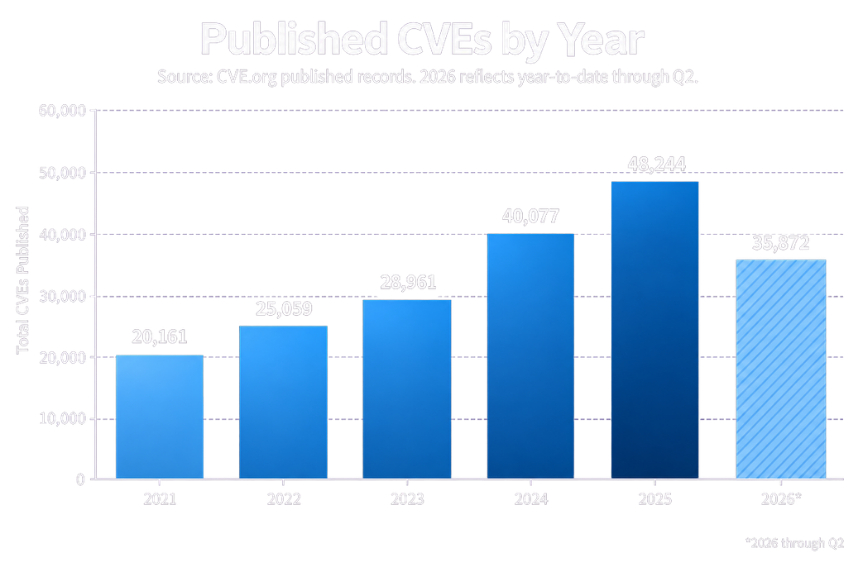
It is important to note that not every CVE affects every organization, and a published vulnerability is not always the same as an immediate, exploitable risk. However, the trend is clear: vulnerabilities are being found and disclosed at a much faster pace.
That faster disclosure cycle means vendors must respond more quickly, and customers must be prepared for a more active patching environment.
Why This Is Happening
A major reason for the increase is the speed at which vulnerabilities are now being discovered.
Security researchers, software vendors, and threat actors are all using more advanced tools, automation, and AI-assisted techniques. These tools make it easier to analyze software, identify weaknesses, and test systems at scale.
At the same time, organizations rely on more software than ever before. A typical business environment now includes operating systems, browsers, SaaS platforms, cloud services, endpoint protection tools, device drivers, firmware, identity systems, business applications, and third-party integrations.
More software creates a larger attack surface. More research and automation means more vulnerabilities are found. Expanded disclosure programs mean more of those vulnerabilities receive CVE numbers and public tracking.
In response, vendors are investing in their own security processes, including:
- AI-assisted vulnerability detection
- Automated code review
- Faster internal testing and validation
- Behavioral threat monitoring
- More frequent patch releases
- Faster response to actively exploited vulnerabilities
This improves security overall, but it also means organizations are now operating in a near-continuous patching cycle.
Modern Updates Are More Complex Than They Used to Be
Security updates today often do much more than fix a single isolated bug.
A single update may include changes to:
- Authentication systems
- Security frameworks
- Browser engines
- System libraries
- Drivers
- Endpoint protection components
- Cloud integrations
- Printing and networking services
- APIs used by business applications
Vendors test updates before releasing them, but real-world environments are extremely diverse. Different hardware models, legacy applications, custom configurations, third-party tools, and specialized business software can all react differently after an update is installed.
That is why an update may install without issue in one environment but cause problems in another.
Common Issues Users May Notice
As updates become larger and more frequent, users may occasionally experience temporary issues such as:
- Slower device performance after updates
- Longer reboot or login times
- Application compatibility issues
- Printing problems
- Network connectivity issues
- Browser or sign-in changes
- Driver-related problems
- New or changed security prompts
- Issues with older or legacy applications
In many cases, these issues are resolved through a follow-up patch, driver update, application update, vendor fix, or configuration change.
Security Patching Is Still Essential
Although updates can occasionally cause disruption, delaying or skipping them creates a much greater risk.
Unpatched vulnerabilities remain one of the most common ways attackers gain access to systems. Once a vulnerability becomes public, threat actors often move quickly to exploit it. In some cases, exploit activity begins within days or even hours of disclosure.
Timely patching helps reduce the risk of:
- Ransomware and malware infections
- Data breaches
- Credential theft
- Unauthorized access
- Business email compromise
- Compliance failures
- Downtime caused by a security incident
Patching is not the only layer of defense, but leaving known vulnerabilities open is one of the most avoidable security risks.
The short-term inconvenience of patching is usually far less damaging than the impact of a successful cyberattack.
What We Are Doing
Our team actively monitors update-related issues across customer environments and works to identify, escalate, and remediate problems as quickly as possible.
This includes:
- Reviewing vendor patch releases and known issues
- Monitoring security advisories and actively exploited vulnerabilities
- Testing and validating updates where appropriate
- Applying fixes and configuration changes when needed
- Watching for patterns across customer environments
- Working with vendors when application-specific issues occur
- Helping users recover from update-related disruptions
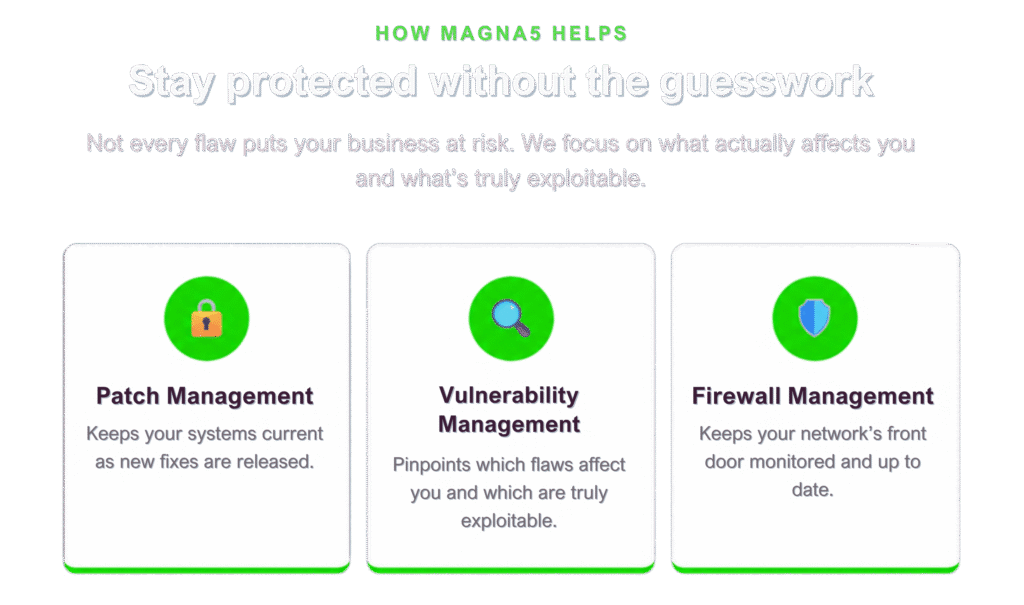
Our goal is to balance security, stability, and productivity. We do not want to patch blindly, but we also cannot ignore vulnerabilities that are already public or actively being used by attackers
What Customers Should Expect Going Forward
The increased pace of security patching is not expected to slow down. If anything, the industry is moving toward faster vulnerability discovery, faster disclosure, and faster remediation.
Organizations should expect:
- More frequent security updates
- Larger monthly patch releases
- Occasional compatibility issues
- More follow-up patches from vendors
- Continued security hardening across platforms
- Increased urgency around internet-facing systems and identity-related services
This does not mean every update will cause a problem. Most updates install successfully and quietly. But the higher volume and complexity of modern patching means occasional disruption is more likely than it used to be.
How You Can Help
Customers and end users can help reduce disruption by following a few practical steps:
- Restart devices when prompted instead of delaying indefinitely
- Avoid bypassing updates on internet-facing systems or systems tied to sign-in and identity
- Report issues as soon as they appear
- When reporting an issue, include the application affected, when the issue started, and what you are seeing
That information helps us determine whether the issue is related to a recent update, a specific application, a driver, or another environmental factor.
Final Thoughts
Update-related issues can interrupt productivity, and we understand how frustrating that can be. However, the faster patch cycle reflects a broader industry shift. Vendors are moving more quickly because attackers are moving more quickly.
Security updates remain one of the most important ways to protect systems, data, and business operations.
We will continue monitoring for problematic updates, prioritizing critical security fixes, addressing disruptions as quickly as possible, and working with vendors when issues arise.
The alternative — leaving known security holes open — creates far greater risk.
We appreciate your patience and partnership as we continue managing these changes and helping keep your organization secure.